
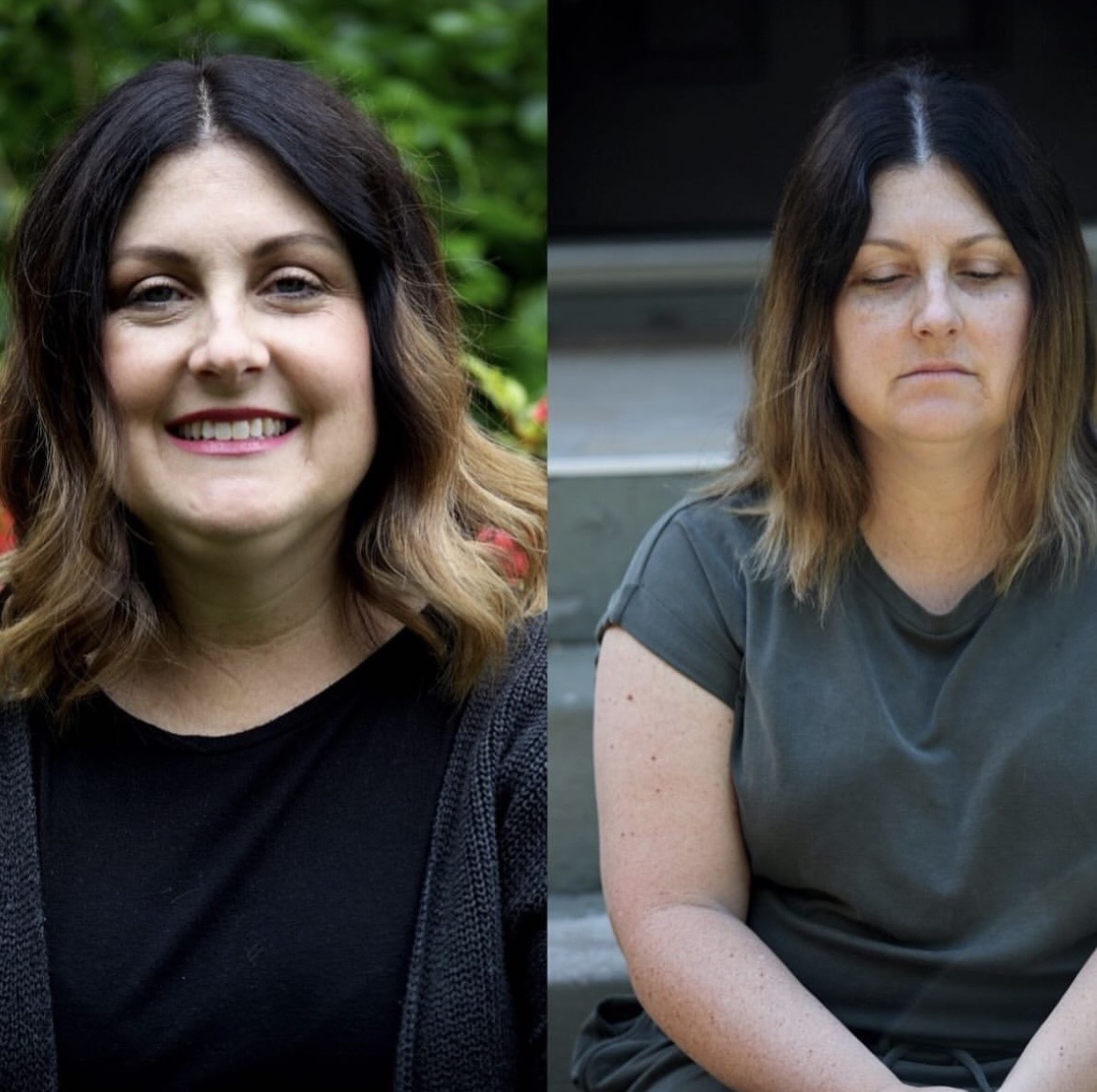
By Laura Watkins
Owner of Pure Salon Spa | Founder of Mental Girl Enterprises | Mental Health Speaker & Author
If you’re like I used to be, you might think mental illness only happens to “crazy people” or to people who have experienced severe trauma.
But what if I told you that mental illness can affect the mom you see at your child’s school?
Or the fun, social, life-of-the-party friend with the contagious laugh?
Or the small business owner down the street who sells Aveda products?
Or the woman with a loving family, a supportive husband, a successful career, and no obvious reason to be struggling?
The truth is — mental illness can look like all of those people.
I know this because it happened to me.
Can Someone Have Depression Even If Their Life Looks “Perfect”?
In 2015, I was diagnosed with Major Depressive Disorder.
At the time, my life looked great from the outside. My business was thriving. My family was supportive. I had incredible friends and opportunities ahead of me.
But inside, I felt a heavy, sinking sense of hopelessness that wouldn’t go away.
No matter what I tried, the feeling stayed.
What I didn’t know then was that the next four years would become the hardest battle of my life.
What Happens When Depression Treatments Don’t Work?
Over the next several years, I tried nearly every depression treatment option available.
I worked with:
- Psychologists
- Psychiatrists
- Talk therapists
I also tried multiple medications and combinations of medications, including:
- Anti-depressants
- Anti-anxiety medications
- SSRIs
- SNRIs
- Mood stabilizers
- Anti-psychotics
Sometimes I would feel better for a short period of time. Then suddenly I would spiral back into a deep pit of mental anguish that I couldn’t climb out of.
This cycle repeated for four years.
Eventually my diagnosis changed to Treatment-Resistant Depression, which means the condition doesn’t respond to traditional medications or therapy.
What Is TMS?
One of the first alternative treatments I tried was TMS (Transcranial Magnetic Stimulation).
This treatment involves using magnetic pulses to stimulate the area of the brain responsible for mood regulation.
My treatment schedule looked like this:
- 5 days per week
- 6 weeks of treatment
- Daily sessions at my psychiatrist’s office
Unfortunately, TMS didn’t work for me.
Do Ketamine Infusions Help Depression?
Next, I tried Ketamine Infusion Therapy, another treatment used for severe depression.
This involved visiting a psychologist’s office and receiving a 30-minute IV infusion of ketamine, a medication shown to help many people with treatment-resistant depression.
But again…
It didn’t work.
At that point, I was running out of options.
What Is ECT Therapy and Does It Work?
Earlier in my battle, my doctors recommended ECT (Electroconvulsive Therapy).
When I first heard that suggestion, I immediately thought of the movie One Flew Over the Cuckoo’s Nest and the terrifying scene where Jack Nicholson’s character undergoes ECT as a form of punishment.
That image stuck with me and there really wasn’t a lot of information about the treatment available online at that time or anyone I knew what had experienced it. I was terrified to try it.
But modern ECT therapy for depression is very different from the outdated depictions many of us have seen in movies.
It’s done under anesthesia, monitored carefully by medical professionals, and has helped many people with severe depression reclaim their lives.
Still, I wasn’t ready.
What does severe depression even feel like?
In the fall of 2019, my depression reached a level that is almost impossible to describe unless you’ve experienced it.
The darkness was overwhelming.
Even though I had always promised I would never hurt myself, I secretly devised a plan on how I would end the pain myself.
Desperate to get my life back, I finally decided to try ECT treatment.
Can ECT Cure Treatment-Resistant Depression?
In November 2019, I began ECT treatments.
I had six treatments in total.
And after the third treatment, something incredible happened.
It felt like someone flipped a light switch back on in my brain.
For the first time in four years, I felt like myself again and was able to grab on to the tiniest sliver of hope that carried me through the rest of my recovery.
ECT gave me my life back.
I continued to receive maintenance ECT treatments every few weeks or months for 4 years to keep my depression under control until I developed a strategic self care routine that has kept me well since.
And honestly?
I will do whatever it takes to avoid living with the darkness of depression again. Stay tuned for more of my story in “My Personal Experience with Mental Illness – Part 2″
This article is part of a mental wellness series by Laura Watkins, owner of Pure Salon Spa. To learn more about Laura’s story, speaking, or her book Something Feels Off, visit www.mentalgirl502.com.